
P&O Ferries—often searched as “poferries”—is one of Britain’s best-known ferry operators, carrying millions of passengers and a huge share of freight between the UK and mainland Europe each year. But in the 2020s, the company’s identity has been defined not only by routes and ships, but by a turbulent reset: a reputational crash in 2022, aggressive cost-cutting to survive pandemic-era losses, and a complicated effort to modernize while rebuilding trust.
TL;DR:
poferries (P&O Ferries) is a major UK ferry operator owned by DP World, essential for passenger travel and freight between the UK and Europe. Its modern story is dominated by the 2022 scandal where ~800 seafarers were abruptly fired and replaced with agency crews, causing massive public and political backlash. Since then, the company has tried to stabilize by cutting losses, simplifying routes (including ending the Teesside–Zeebrugge service), and modernizing its fleet with cleaner, newer ships. But trust remains fragile, especially with tightened labor laws, auditor resignations over delayed accounts, and the CEO stepping down in 2025. In short: operational reset is underway, but reputational recovery is still the hardest part.
A legacy operator with strategic importance

P&O Ferries is owned by DP World, the Dubai-based logistics giant. The company operates roll-on/roll-off ferries that carry both passengers and freight, making it a key artery for UK–EU trade and tourism. Its network has historically centered on three major passenger routes:
- Dover – Calais (the flagship Channel crossing)
- Hull – Rotterdam (North Sea passenger & freight)
- Cairnryan – Larne (Northern Ireland lifeline) The Times
Because ferries are floating infrastructure, P&O’s stability matters beyond brand image: when it works smoothly, supply chains and travel plans stay intact; when it stumbles, the ripple reaches ports, exporters, and entire regions.
The defining crisis: the 2022 mass dismissal scandal
P&O’s modern era pivots on a single moment. In March 2022, the company abruptly dismissed around 800 seafarers without the legally required union consultation, informing many via short video calls. The staff were replaced largely by lower-paid agency crews.
Public reaction was explosive. UK politicians across parties condemned the move, unions called for boycotts, and P&O became shorthand for the harshest form of “fire and rehire.” The company later admitted the dismissals were unfair and said it had taken the decision because the business was losing large sums and would not survive without drastic crewing cost reductions.
Financial reporting later indicated P&O spent about £47 million on the restructuring—severance, replacement hiring, and transition costs.
Even as losses shrank afterward, the reputational wound stayed open. Nearly every major P&O story since has been framed through the lens of 2022’s choice.
Regulation tightens: the industry responds
The scandal didn’t just damage P&O; it changed the policy climate around UK ferry staffing. One major outcome was the UK Seafarers’ Wages Act, aimed at ensuring ferry operators pay at least the National Minimum Wage in UK waers—closing key loopholes that had allowed lower-cost crewing models.
France also moved to strengthen pay and labor standards on cross-Channel routes. The pressure signals a new environment where P&O cannot rebuild by repeating the cost playbook of 2022.
Governance and trust problems continue
P&O’s comeback has been complicated by governance noise. One of the most damaging headlines in 2025 was the resignation of its long-time auditor, KPMG, after repeated delays in filing accounts. KPMG said it couldn’t complete the 2023 audit to the required standard due to persistent issues that had already affected the 2022 accounts.
To critics, this raised uncomfortable questions about transparency and oversight during a period when the company was already rebuilding legitimacy.
Leadership reset: the CEO steps down
The face of P&O’s crisis was CEO Peter Hebblethwaite, who defended the 2022 layoffs publicly and became one of Britain’s most criticized business leaders. In August 2025, he announced he would resign.
His tenure captured P&O’s paradox:
- financial performance improved after restructuring,
- but public trust collapsed, and never fully recovered under his watch.
His departure is widely seen as a symbolic “chapter break”—the company’s chance to reset tone and strategy under new leadership.
Route consolidation: a leaner network
Another part of P&O’s reinvention is strategic trimming. In 2025, the company closed its long-running Teesport (Teesside) – Zeebrugge freight service after more than 30 years, citing a need to focus on “more strategic North Sea operations.”
This left P&O with a tighter UK network centered on the three core passenger routes listed earlier. Officially, P&O framed the change as optimizing for resilience and efficiency; externally, it’s widely read as consolidation to control costs and concentrate on stronger lanes.
Fleet modernization: betting on technology and sustainability
While headlines focus on labor and governance, P&O has also invested heavily in hardware—because service reliability and emissions are now competitive battlegrounds.
Recent years have brought:
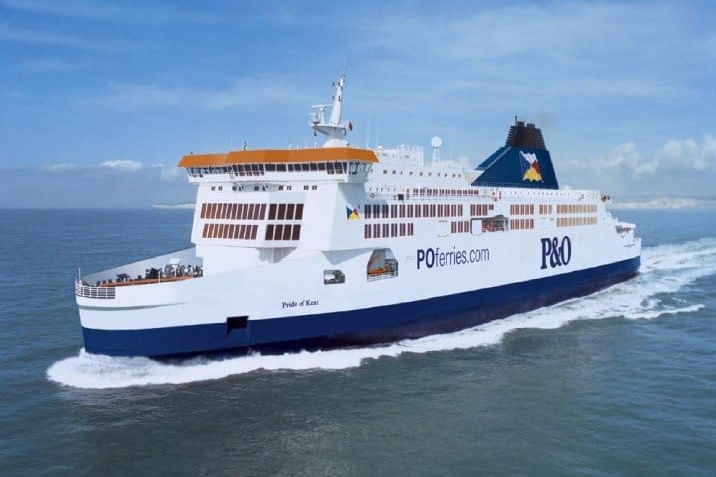
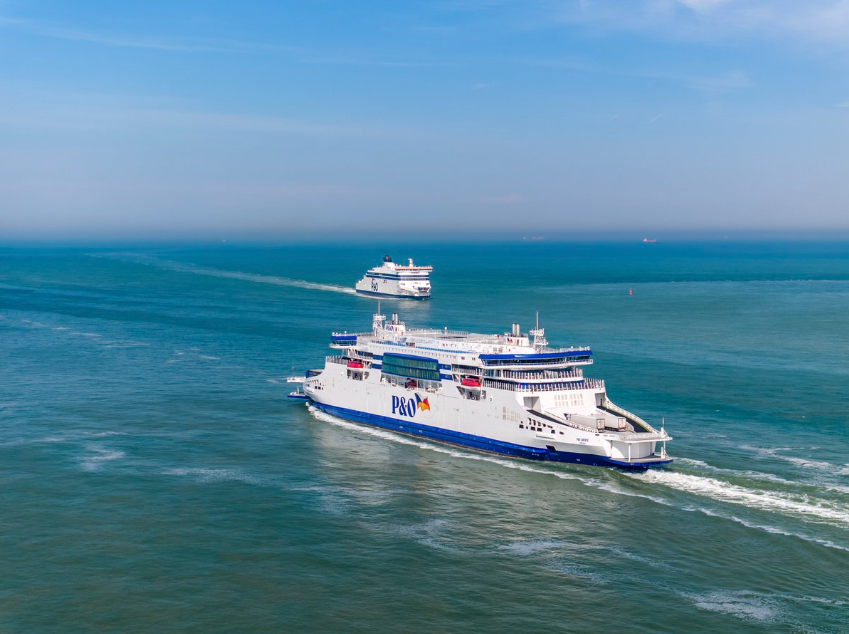
- new hybrid ferries on Dover–Calais, positioned as more fuel-efficient and modern than older ships. (The hybrids are repeatedly referenced in reporting on P&O’s modernization push.) The Guardian
- pilot and expansion steps into lower-carbon fuels on North Sea operations, reflecting broader EU/UK maritime climate pressure. The Guardian
These moves matter because they let P&O compete on operational quality and sustainability rather than wage arbitrage.
So… is a comeback really happening?
P&O’s current era is a balancing act between two realities:
1. Operational comeback
- losses reduced after restructuring,
- fleet upgrades underway,
- core routes stabilized,
- network simplified. Marine Industry News+1
2. Trust deficit
- the 2022 scandal still dominates perception,
- tighter wage laws reduce past cost advantages,
- governance controversies (audit delays) keep the brand under suspicion,
- leadership change creates both hope and uncertainty. Wikipedia+2The Guardian+2
In other words, the company may be sailing more efficiently, but it’s still navigating heavy reputational waters.
Conclusion
“poferries: Navigating a New Era of Change, Challenge, and Comeback” is an accurate snapshot of where P&O Ferries stands today. The operator is trying to move forward with a leaner route map and a modernizing fleet, while new labor rules and public memory of 2022 limit how it can compete. The CEO who symbolized the crisis is gone, and the company is under pressure to prove that its next era won’t be built on the same shortcuts that caused its downfall.

Other Articles

WHSmith Review, The Ultimate Online Store For Books And Stationery