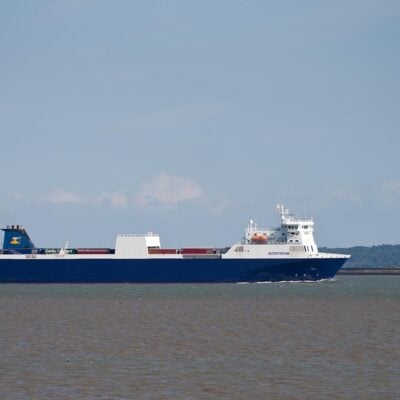

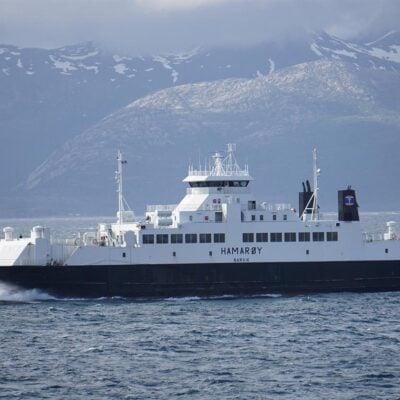
Few transport brands in Britain are as familiar as P&O Ferries. For generations, its ships have been part of the everyday map of UK–Europe travel: school trips to France, holiday crossings with cars packed for a week away, and the steady flow of freight that keeps supermarket shelves full. But the 2020s have forced P&O into a new identity—one shaped by crisis, scrutiny, and an uncomfortable question: can a company remain strategically vital while rebuilding moral credibility?
TL;DR:
P&O Ferries is a major UK ferry operator owned by DP World, vital for passenger travel and freight links like Dover–Calais, Hull–Rotterdam, and Cairnryan–Larne. Its modern story is dominated by the 2022 scandal where roughly 800 seafarers were fired without proper consultation and replaced with agency crews, crushing public trust. Since then, P&O has tried to steady itself by cutting losses, simplifying routes (including ending Teesside–Zeebrugge), and modernizing its fleet with big hybrid ships on the Channel. But reputational recovery is still hard, especially with tighter wage laws, governance controversy (auditor resignation over delayed accounts), and a CEO exit in 2025. Bottom line: operational reset is real, but trust rebuilding is the bigger battle.
A legacy operator with infrastructure weight
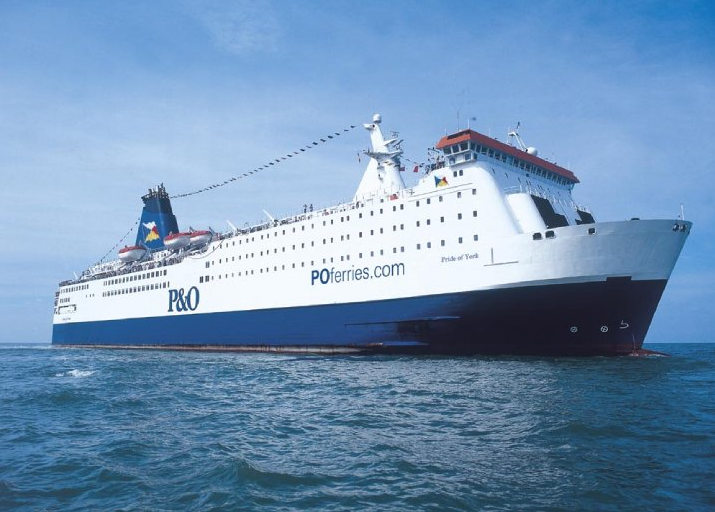
P&O Ferries is owned by DP World, the Dubai-based ports and logistics group. It operates a mix of passenger and roll-on/roll-off freight services that form key corridors across the English Channel, North Sea, and Irish Sea.
Today, after network trimming, P&O’s main passenger routes are:
- Dover – Calais (flagship Channel route)
- Hull – Rotterdam (North Sea passenger + freight)
- Cairnryan – Larne (Northern Ireland lifeline) Kent Online+1
These routes matter beyond tourism. P&O carries large volumes of freight, meaning any disruption affects supply chains, exporters, ports, and regional economies. That strategic importance is why its scandals didn’t stay private—they became political.
The 2022 rupture: the moment trust broke
P&O’s modern era pivots around March 2022, when the company abruptly dismissed around 786–800 UK seafarers without the required union consultation, informing many via short video messages. Staff were quickly replaced with lower-cost agency crews.
The backlash was instant and historic:
- UK politicians across parties condemned it.
- Unions called for boycotts and legal action.
- P&O became shorthand for the harshest edge of corporate cost-cutting. Financial Times+1
Later financial accounts revealed the firings and replacements cost about £47 million in restructuring expenses.
P&O’s leadership said the decision was driven by survival after massive pandemic-era losses, but even supporters of restructuring admitted the method was brutal. The outcome: costs fell, but trust collapsed—and stayed collapsed.
Regulation tightens: the tide turns against old models
One lasting effect of the scandal is that it accelerated tougher labor standards. The UK introduced the Seafarers’ Wages Act, aimed at enforcing at least minimum-wage pay for ferries operating in UK waters, limiting the very loopholes that made P&O’s post-2022 crewing model attractive. France has also strengthened pay rules for cross-Channel operators.
In short, the era where P&O could compete mainly by driving crew costs downward is closing. Its future competitiveness has to come from service quality, fleet efficiency, and smarter network strategy.
Fleet modernization: competing on ships, not shortcuts
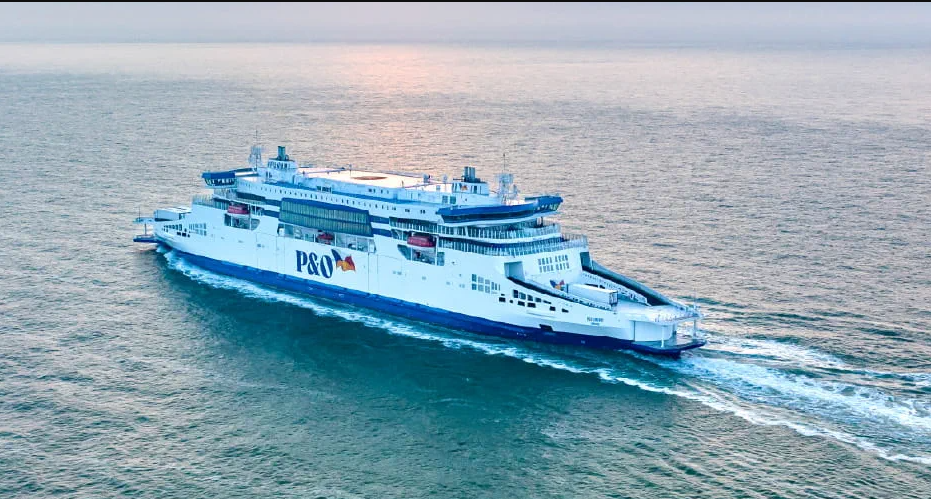
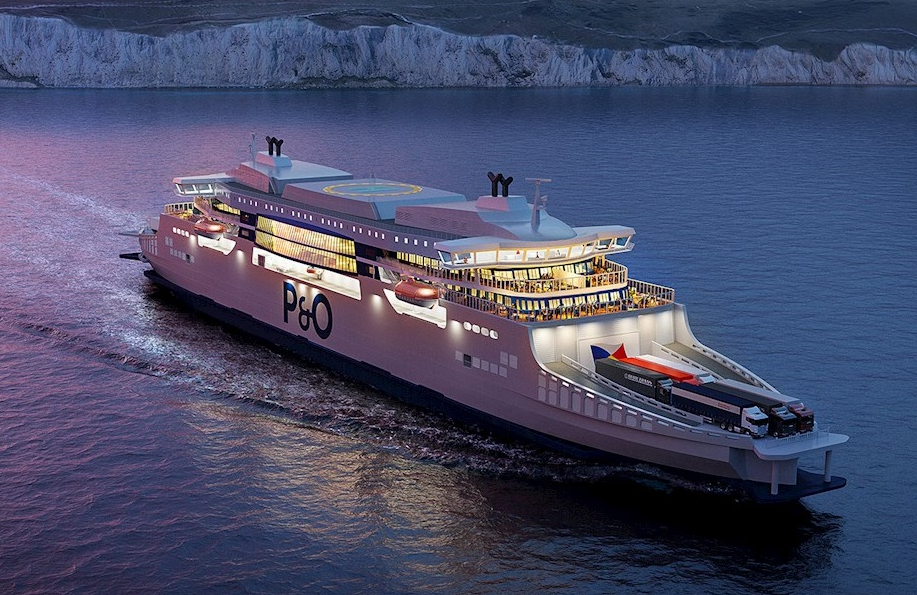
While controversy dominates headlines, P&O has also been quietly reshaping its hardware. On Dover–Calais, it introduced two large hybrid fusion-class ferries:
- P&O Pioneer
- P&O Liberté Baird Maritime / Work Boat World+3blog.poferries.com+3Wikipedia+3
These ships are designed for lower emissions, higher efficiency, and eventual conversion to battery-electric propulsion once port infrastructure allows. They represent a major investment—commonly reported around £250 million for the pair—and are meant to symbolize a cleaner, more modern P&O.
From a strategic perspective, this matters because it lets P&O pitch a new value proposition: modern crossings with reduced carbon footprint, rather than just cheap crossings. It’s one of the few areas where the brand can look forward without having to re-litigate the past.
Governance turbulence: the comeback’s weak flank
If fleet investment is P&O’s strongest comeback tool, governance has been its biggest drag. In 2025, long-time auditor KPMG resigned, saying it could not complete the company’s 2023 audit to the required standard, after years of late accounts.
The situation worsened in public perception when P&O replaced KPMG with Just Audit & Assurance, a tiny four-person firm—prompting questions about independence and oversight for a large operator.
For a company already rebuilding legitimacy, this kind of headline doesn’t just look messy—it makes trust recovery harder, because reliability at sea depends on confidence in management on land.
Leadership reset: a symbolic turning point
CEO Peter Hebblethwaite, who oversaw the 2022 dismissals and became a lightning rod for public anger, announced his departure in August 2025.
His tenure produced a paradox:
- financially, losses narrowed after restructuring,
- operationally, ships modernized,
- reputationally, the brand fell into a hole that one leader could not climb out of. Financial Times+1
His exit is widely viewed as the company’s chance to “relearn the tide”—to signal that the next era won’t be built on the same playbook.
Route strategy: tightening to survive
P&O has also been simplifying its network. A notable move was the closure of the long-running Teesside – Zeebrugge freight route in 2025, ending over 30 years of service. The company said this was to focus on more strategic corridors.
This consolidation suggests P&O is prioritizing efficiency and profitability over breadth. That’s a rational survival strategy in a more regulated, more competitive market—but it also signals that the company is still recovering rather than expanding.
Where P&O stands now
By late 2025, P&O Ferries is operating in two overlapping worlds:
Operational recovery
- leaner route map,
- hybrid fleet upgrades,
- improving cost base and service reliability. Wikipedia+2MultiModal UK+2
Reputational repair
- the 2022 scandal remains a defining memory,
- wage laws reduce old cost advantages,
- governance issues keep scrutiny high,
- leadership turnover creates hope but not certainty. The Guardian+2Financial Times+2
So the company is moving forward, but under a spotlight that hasn’t dimmed.
Conclusion
“Between Crossings and Controversy—A Brand Relearning the Tide” captures the essence of P&O Ferries today. The operator remains essential to the UK’s travel and trade arteries, but its legitimacy took a historic hit in 2022. Since then it has tried to rebuild through modernization—hybrid ships, a tighter network, and cost stabilization—while governance headaches and public mistrust continue to chase it.

Other Articles

Fabulosa Laundry, Everyday Freshness That Actually Lasts
KULFI Beauty Review, Discover Quality Skincare And Wellness Online